


Lessons from building enclosure consulting applied to design professionals.
The conversation about AI in architecture often swings between two extremes: utopian visions of automated design or apocalyptic warnings about obsolescence. Both miss the point. The real question isn’t whether AI will change architecture; that seems to be a foregone conclusion, but it doesn’t absolve design professionals of the responsibility to guide and shape the direction our collective industry takes. So the real question is what should change and what must remain fundamentally human.
Building enclosure consultants at firms like BECI face similar pressures: complex technical analysis, demanding documentation requirements, and clients who need answers fast. Their experience navigating AI adoption offers architects a practical framework: embrace automation where it eliminates friction but defends the irreplaceable value of professional judgment.
Based on BECI’s 35 years of professional experience, here is where we think that line should be drawn.
What AI Should Change: Documentation Burden, Not Design Thinking
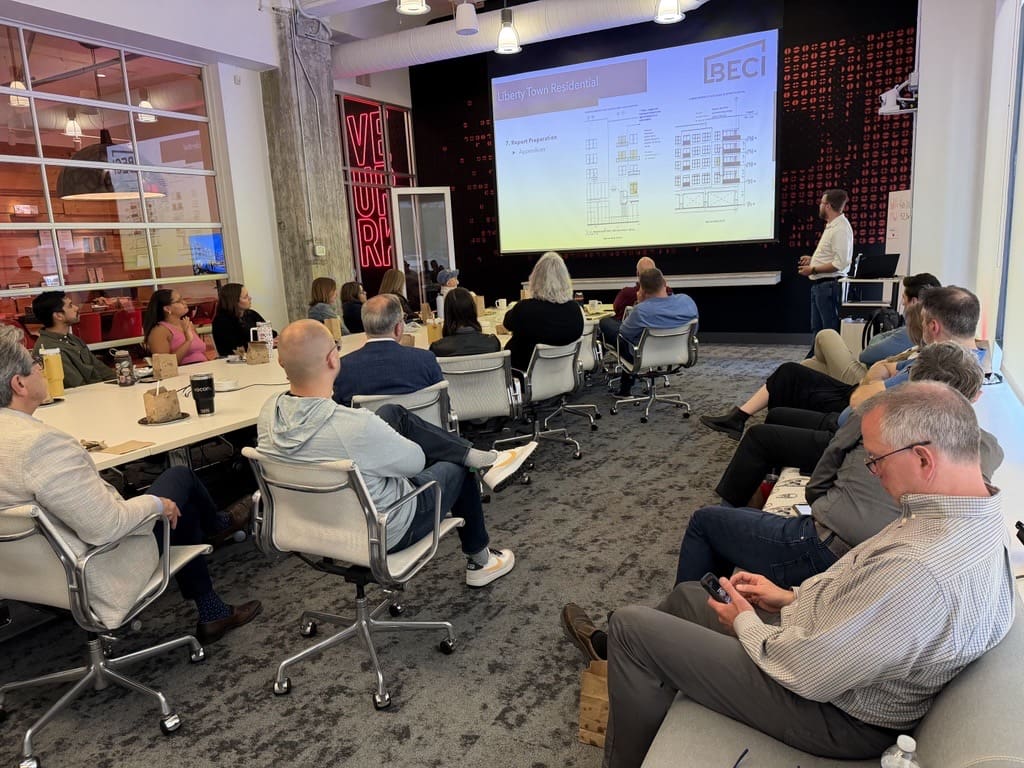
The greatest opportunity for AI in architectural practice lies in reclaiming valuable time currently lost to administrative overhead, repetitive coordination tasks, and documentation production. This is the kind of work that, while important in its own right, keeps architects from doing what they do best: designing buildings that serve people, and both shape and enrichcommunities.
Construction Documentation Production
Generating coordinated CD sets consumes disproportionate time relative to its creative value. AI should automate sheet composition, cross-reference detail callouts, flag missing annotations, verify title block consistency, and ensure drawing sets align with specification sections. This doesn’t replace the architect’s design intent. On the contrary, it accelerates delivery of that intent to contractors who need buildable documents, not next month’s revision.
Code Research and Compliance Verification
Any project will fall under some combination of IBC codes, general accessibility provisions, local zoning overlays, energy codes, and historic preservation guidelines. This mass of regulations can often create conflict, whether with the various regulatory priorities or with the design vision itself. AI should bypass—or at the very least, supplement—manual research and surface relevant sections instantly, flag conflicts between codes, and generate compliance matrices. The architect still interprets applicability and crafts design solutions, but AI utilization removes hours of manual cross-referencing and reduces the risk of overlooked requirements.
RFI Management and Coordination
Contract/construction administration generates hundreds of requests for information, submittal reviews, and change orders. AI should triage RFIs by urgency, surface relevant contract documents and previous responses, draft initial replies for architect review, and maintain comprehensive logs with automatic status tracking. This transforms CA from reactive firefighting into proactive quality control.
Clash Detection and Model Coordination
BIM coordination meetings currently require architects to manually review consultant models, identify conflicts, and track resolutions across disciplines. AI should run continuous clash detection, categorize conflicts by severity and system, assign responsibility, and monitorresolution status—freeing coordination meetings to focus on design integration challenges that require collaborative problem-solving, not data reconciliation.
What AI Shouldn’t Change: Client Relationships, Design Judgement and Professional Responsibility
Architecture isn’t just a documentation service, while documentation is very important. It’s a professional practice grounded in judgment, creativity, and accountability. The boundaries for AI become clear when we remember what clients actually hire architects to do.
Client Relationships Must Remain Human
Building owners hire architects for vision shaped by experience. A design may be a technical solution, but it’s also a response to program, context, budget constraints, and often competing stakeholder priorities. AI can generate options, but it can’t read a client’s reaction during a design review, sense when to simplify a presentation, or know when to defend a design decision that serves long-term value over short-term cost. Those interactions require empathy, credibility, and trust. These things can only be earned through relationships, not algorithms.

Design Judgement Can’t Be Automated
AI can analyze site conditions, generate massing studies, and optimize layouts for circulation efficiency. It cannot determine whether a building should defer to its historic neighbors or boldly assert a contemporary counterpoint. It does not know what a city’s design language is. It cannot balance the tension between daylighting and thermal performance when both can’t be maximized. It cannot decide which programmatic adjacencies matter most when space is constrained. Context matters. Cultural expectations, community character, client values, and the architect’s own design philosophy all inform judgment. The architect who’s designed hundreds of buildings, navigated countless site constraints, and learned from successes and failures brings irreplaceable pattern recognition. AI should support that expertise, not substitute for it.

Ethical Responsibility Stays With the Architect
For thousands of years, building spaces for people has been recognized as an activity that involves inherent ethical questions. As a key part of this process architects bear legal and ethical obligations that extend beyond contract performance. That means recommending what’s right for occupant welfare, not what’s profitable. It means speaking up when life-safety issues exist, even when it’s uncomfortable. It means declining to certify inadequate designs, even under schedule pressure. AI has no license to protect, no professional liability, and no moral compass. It doesn’ttestify in litigation, doesn’t face disciplinary boards, and doesn’t lose sleep over building failures. Architects do. The decision to seal drawings, approve a substitution, or recommend value engineering must remain a human responsibility, informed by professional judgment and guided by the duty to protect public health, safety, and welfare.
Site-Specific Observation Can’t Be Delegated
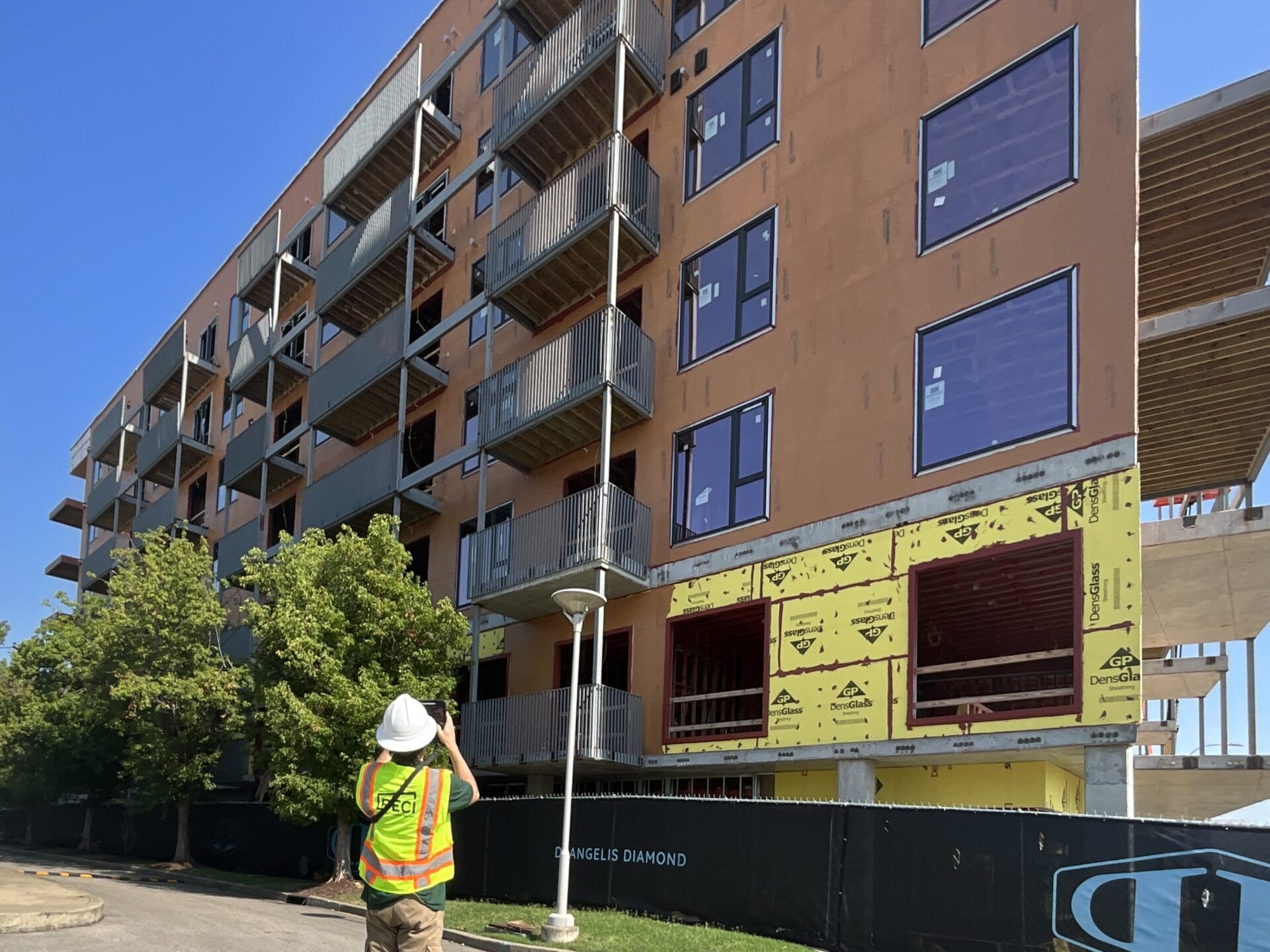
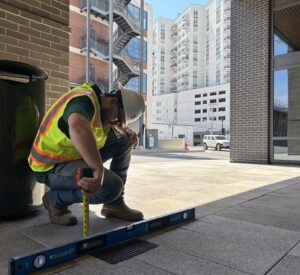
Construction administration requires the architect’s presence, not just documentation review. Site visits reveal constructability issues that don’t appear in shop drawings: inadequate working space for installation, sequencing conflicts between trades, material substitutions compromising design intent. The architect who walks the site, observes real conditions and understands how buildings are actually built brings judgement that no remote AI analysis can replicate. AI should streamline documentation and tracking, but professional observation ensuring quality must remain human.
The Path Forward: Augmentation, Not Displacement
The best use of AI in architectural practice isn’t about doing less work—it’s about doing better work. AI should handle the repetitive, the time-consuming, and the data-intensive so that architects can focus on the creative, the relational, and the strategic.
Forward-thinking practices are exploring AI tools that align with professional values: technologies that make teams more responsive to clients, more efficient in delivering coordinated documents, and more capable of preventing costly errors. But they’re equally committed to preserving what makes architecture valuable in the first place—the experienced professional who understands context, serves client needs, and takes responsibility for the built outcome.
Technology changes. People don’t. They still need buildings that inspire, shelter, and endure. They still need professionals who listen, who understand constraints, and who translate aspirations into built form. AI can help architects get there faster. It can’t replace the creative judgment that makes the journey worthwhile.

Key Principles for Architects Adopting AI:
- Automate documentation, not design thinking. Use AI to accelerate design set production, not to generate design solutions.
- Preserve client relationships. AI can prepare materials for meetings, but the architect must lead the conversation.
- Maintain professional judgment. AI can surface options and analyze data, but the architect decides.
- Protect ethical responsibility. Decisions affecting public safety, accessibility, and building performance require professional accountability that AI cannot assume.
- Stay present in the field. Construction observation requires human judgment; AI should support documentation, not replace site visits.
The practices that thrive won’t be those that adopt AI fastest—they’ll be those that adopt it most thoughtfully, using technology to amplify human creativity rather than displace it.
About BECI
BECI provides expert building enclosure consulting services for new and existing construction. With a focus on sensible spending, stakeholder collaboration, and long-term building resilience, BECI helps clients minimize risk and extend the life of their assets.
If you have any questions, don’t hesitate to reach out and connect with our experts.