

There is a deceptive sense of security that settles over a job site as construction nears completion. The facade is complete, and the building appears solid, so the stress is over, right?
For developers and architects, this is often the phase that causes the most worry, as they know all too well that a building’s outward appearance doesn’t always reflect how it will perform long-term or under weather-related stress.
When approached intentionally, commercial building waterproofing is the best way to eliminate water damage, a top source of post-construction insurance claims and structural damage.
The Reality of Water Migration
Water is opportunistic in nature. It interacts with buildings in various ways, such as rain-driven bulk water, droplets moving through small cracks, and internal air pressure that pushes moisture into assemblies.
In commercial construction, failure points are rarely on large, flat surfaces but are almost always found at transitions within the enclosure. If the waterproofing fails, it’s usually at these specific interfaces:
- Below-Grade Foundations: Such as basements, parking garages, or sub-levels.
- Podium and Plaza Decks: Elevated platforms, usually made of reinforced concrete.
- Facade Interfaces: The spots between windows, curtain walls, and slab edges.
- Roof Transitions: Where the horizontal membrane meets vertical walls or penetrations.
If the project teams don’t understand how materials work together, the design remains a gamble.
Selecting the Right Commercial Building Waterproofing
Most commercial projects rely on a few core waterproofing systems. Choosing the most effective system for the conditions on your building is of the utmost importance. And having that system installed per manufactures requirements will determine how well your building enclosure performs.
- Below-Grade Membranes: Used on parts of the building that are in direct contact with the earth, where exposure to soil moisture and hydrostatic pressure is constant. These systems are available as a liquid-applied or sheet-good system.
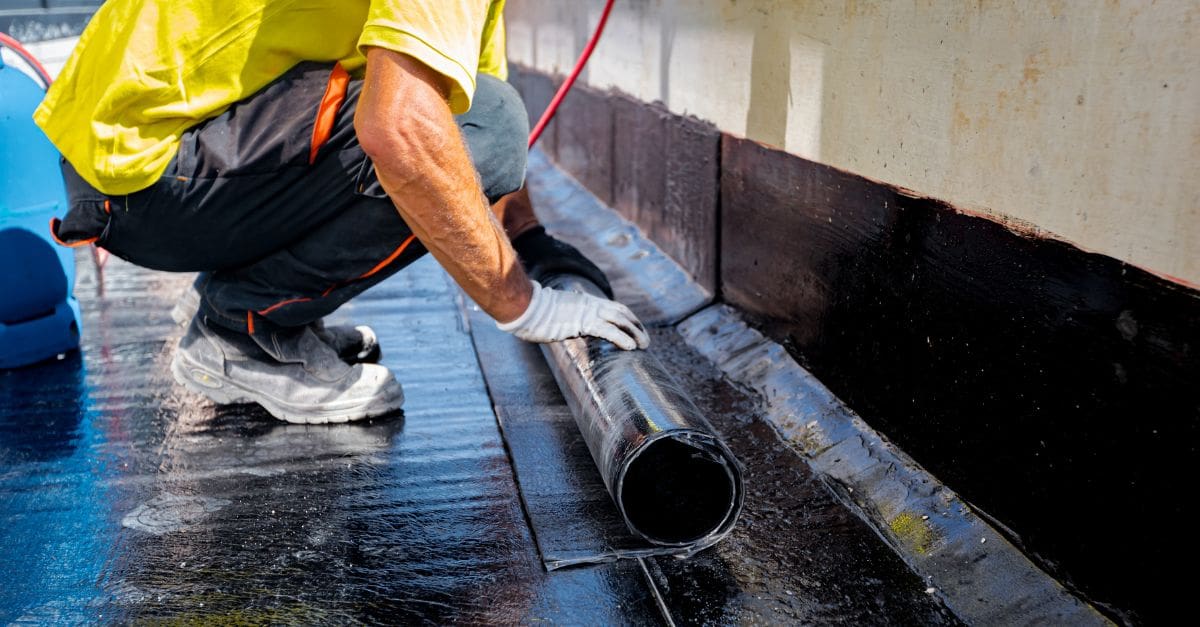
- Weather Resistive Barriers (WRB): There are several different types of WRB. One of the most common is Fluid-Applied Membranes. These systems are sprayed or rolled onto the substrate to create a monolithic barrier. Usually found on high-performance buildings.
- Cladding: Choosing the right cladding for your project considers a combination of aesthetics and conditions the building will be exposed to. There are many different types, like Exterior Insulation and Finishing Systems (EIFS). This is rigid foam panels with a mesh coating, providing superior insulation (thermal regulation) and impact resistance.
- Single-Ply Roofing (TPO/PVC): Effective for large spans, provided the flashing and edge details are executed correctly. TPO is the most cost-effective, and PVC is better suited for high-traffic roofs or roofs that might be exposed to chemicals or grease.
Proving Performance Through Documentation
Confidence in a building’s enclosure stems from the data collected through testing. Incorporating waterproofing is a must, but verifying it is often the only way to ensure the design intent matches the reality of the installation.
Development teams can maintain oversight to minimize the risk of enclosure issues from project opening through closeout:
- Design Peer Reviews to clarify critical transitions before documents are finalized.
- Quality Assurance Site Visits to ensure the crew is installing the system as specified.
- Testing Services to verify performance before systems are concealed.
- Building Envelope Commissioning (BECx) to track the enclosure as a whole throughout the entirety of the project.
Construction will always be a complex process, but by taking these measures, developers gain more certainty over the long-term outcome of their project. By documenting performance before exposure, teams can be sure, reducing ambiguity at turnover, clarifying warranty responsibilities, and reinforcing the asset’s long-term durability.
Conclusion
Every joint and seam on a building will eventually face the test of time. The difference between a long-term asset and a maintenance nightmare lies in how transitions are reviewed and handled, starting at the very beginning.
If your team is in the design development, preconstruction, or early installation phase of a commercial project, now is the ideal time to evaluate how well your waterproofing is being installed.
To learn more about BECI’s approach to commercial building waterproofing and new construction consulting, contact our experts today.